

Gold ended last week near $4,180 an ounce, and the S&P 500 closed Friday at a record 7,723. Weeks earlier, the Census Bureau announced that real median household income had reached $87,460, the highest ever recorded. By the official scorecard, Americans have never been richer.
But consider a different scorecard, set fifty years back. In 1976, the median American family earned $14,960. Gold that year averaged about $125 an ounce, which means the typical family’s annual income could buy roughly 120 ounces. At today’s price, those ounces are worth about $500,000. Last year the median family instead earned $110,500, enough for only about 26 ounces.
The median family should therefore be earning half a million dollars a year. It actually earns about a fifth of that. So where did the rest go?
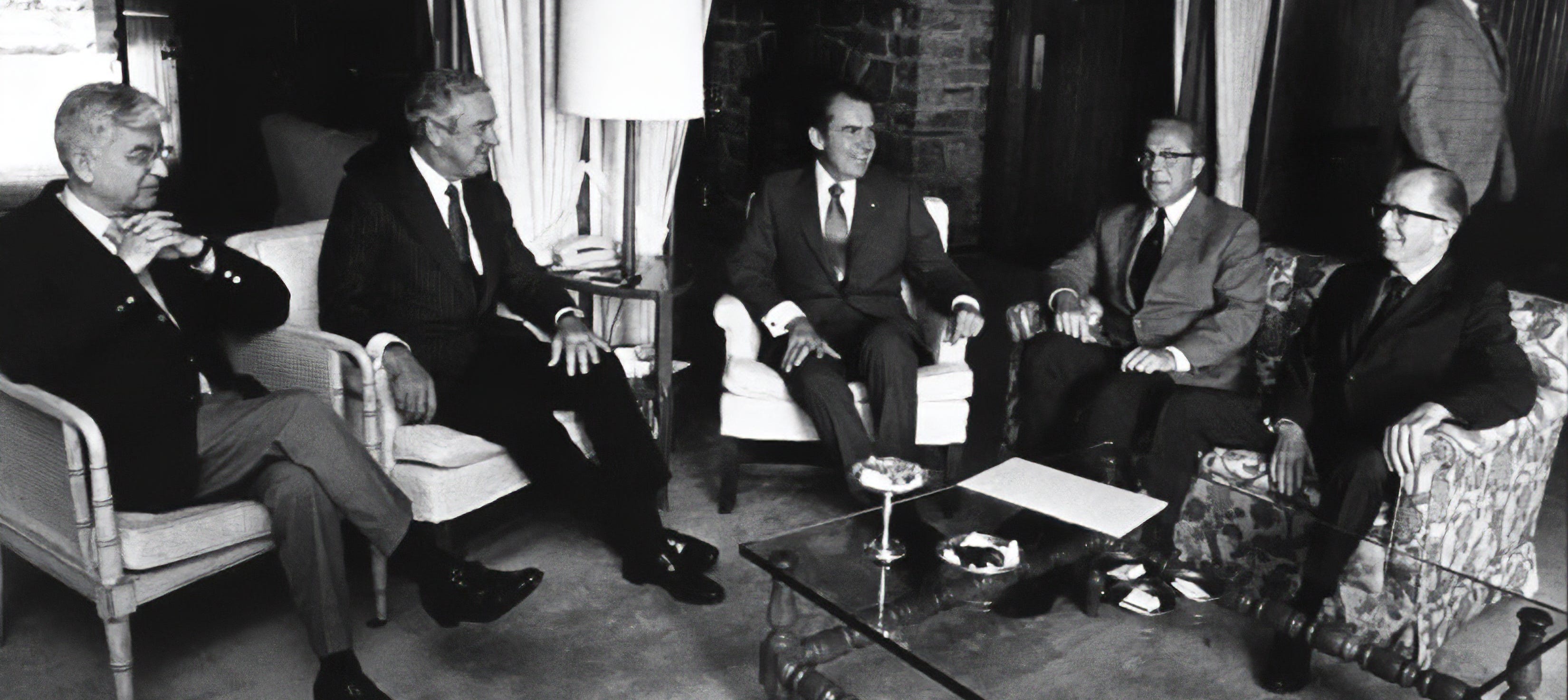
From 1933 (thanks a lot, FDR) through December 31, 1974, the federal government forbade Americans (in the “land of the free,” mind you…) from possessing gold. During this time, the federal government manually set the price of gold at $35/ounce for foreign banks and governments, suppressing the market-based value of the contraband commodity. That arbitrary price held until August 1971, when Richard Nixon cut the dollar’s last tie to gold because, as the Federal Reserve's own history concedes, Washington had issued more dollars than it had gold to honor them.
By 1976 (50 years ago), both distortions were gone. Gold traded freely, any American could legally buy it, and its price was set by buyers and sellers in an open market rather than by Treasury decree. Thus, we can use this market-based price as a reference point to see how much has been taken from us.
The point becomes clearer when you analyze it in terms of hours of your life. In 1976, the federal minimum wage was $2.30, so an hour of the lowest-paid labor in America bought about one fifty-fourth of an ounce of gold. To buy that same amount today, the minimum wage would need to be about $77 an hour. (It is $7.25, and, tangentially, should be zero). A minimum-wage worker then needed about 54 hours to earn an ounce of gold. Today it takes about 575 hours, over ten times as many.
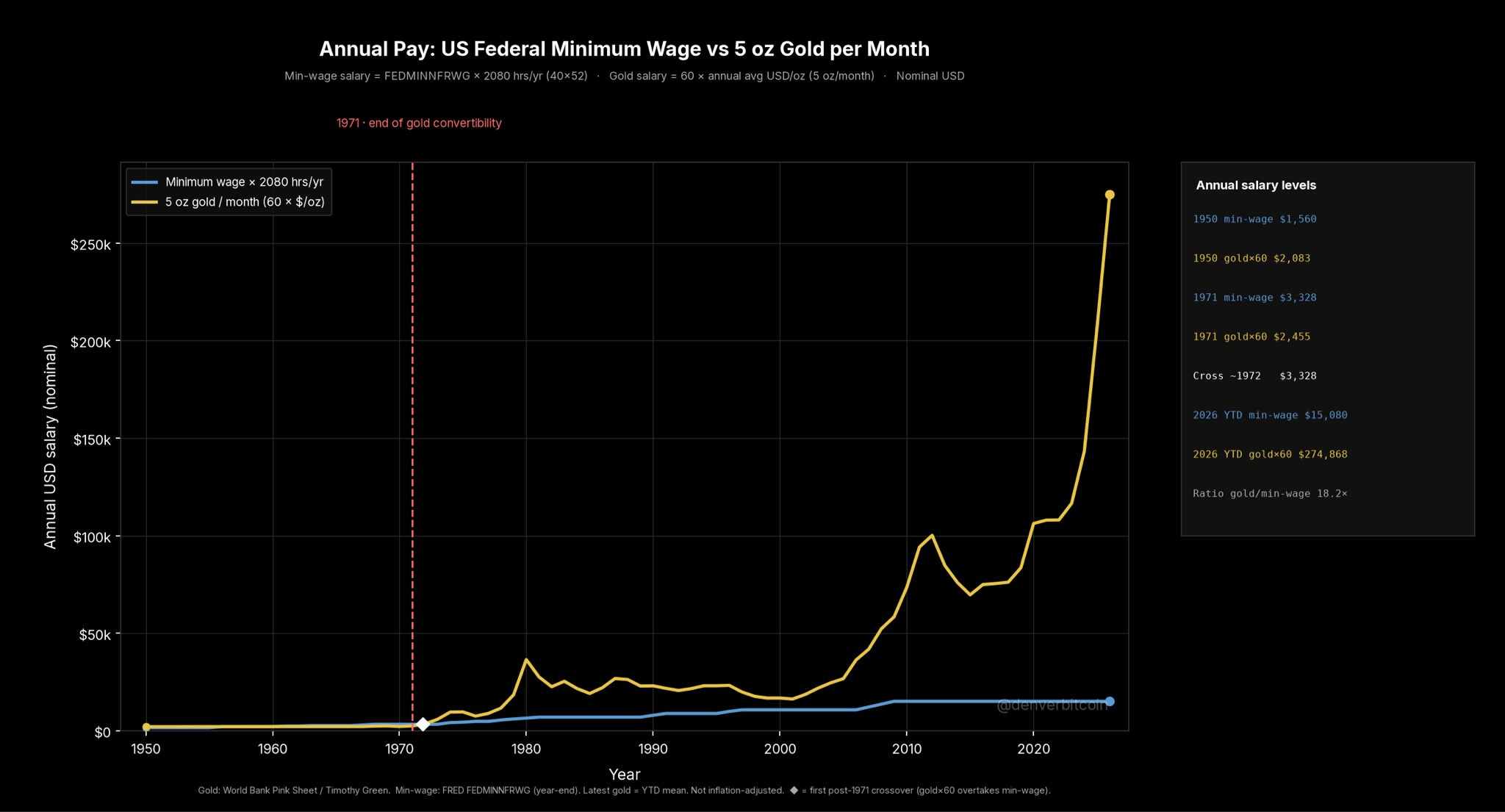
Go back further. In January 1914, just days after the dollar-devaluing Federal Reserve was formed, Henry Ford announced his famous five-dollar day. A five-dollar gold coin held about a quarter ounce of gold, so a Ford line worker took home, every day, metal worth roughly $1,000 at today’s prices. A month’s work amounted to about five ounces, or nearly $21,000 today. And they kept nearly all of it. Along with the Fed’s creation came ratification of the federal income tax, which exempted the first $3,000 of a single person’s income—about double what a Ford worker earned in a year. (Its top rate, reserved for the richest Americans, was a measly 7 percent.)
Today the median full-time worker earns $1,251 a week. At that rate, one must work four months to earn the same amount of gold a Ford worker earned in one month. That’s over 500 more hours to earn the same value, and that’s before factoring in, for the median household, roughly one quarter of this money taken by federal income taxes, further reducing one’s take-home pay.
Over the past fifty years, the dollar has lost roughly 83 percent of its purchasing power; since the Federal Reserve opened in 1913, about 97 percent.
But not everyone loses value equally. Richard Cantillon observed in the 1700s that new money arrives unevenly, entering first through governments, banks, and asset markets. Those nearest the money spigot spend it before prices adjust; wage earners receive it last, after the prices have already adjusted. Inflation, in other words, is a transfer from savers and workers to borrowers and insiders, executed so quietly that its victims are largely unaware of who or what is actually to blame. (Hint: the government.)
That is why the “record stock market!” deserves a second look. Since January 2020, the S&P 500 has risen about 137 percent in dollars. Priced in gold, though, it has fallen roughly 13 percent. And priced in bitcoin, about 80 percent. Smoothed over four-year averages, as in the video below, stocks have gone essentially nowhere in gold and collapsed 93 percent relative to bitcoin.
The lesson here is rather simple: before celebrating what the market did, pause to consider how those supposed gains are being measured. Nominal increases in how many dollars your assets are worth may create the appearance of growth, but they actually reflect the dollar’s devaluation and your poor financial position.
Ludwig von Mises understood that the stakes were never merely financial. Sound money, he argued, was devised as an instrument for the protection of civil liberties against despotic inroads. A government that can print need never ask permission, and a government that need never ask permission will eventually stop asking about much else.
None of this requires naively waiting for Washington to restore a gold standard. The solution is individual, and it is available today. Every family can decide what it saves in, ounce by ounce or satoshi by satoshi (a fraction of a bitcoin), and can teach its children why, so that the next generation grows up measuring its labor (and storing its output) in something no Federal Reserve or congressional committee can dilute.
You should be earning half a million dollars a year. The money printers decided otherwise, slowly draining the value of your past earnings and your present labor. What you earn from here on can still be kept in money they cannot print. Act accordingly.
P.S. We discuss this topic regularly in our Tuttle Twins children’s books and curricula, as well as the cartoon. Below is one of many cartoon episodes in which we address it (see more here):