

This week, a Fox News poll put Donald Trump’s approval at 36 percent, the lowest of his two terms. Among independents, only 22 percent approve. On inflation, the issue that carried him back to the White House, his approval also sits at 22 percent. Democrats lead the generic congressional ballot by 8.9 points in Silver Bulletin’s average, and prediction markets give them a 90 percent chance of taking the House.
A blue wave has long been swelling. Let’s pause a moment to ask why.
Trump did not win in 2024 on Republican votes alone. He reached for people with no natural home in either party: independents squeezed by prices, moderates weary of foreign military adventures, and libertarians, a constituency he courted in person at the Libertarian National Convention, where he pledged to put a libertarian in his cabinet and free Ross Ulbricht. I was among those who were compelled to give him a shot. The reasoning seemed sound. Four years in exile, two impeachments, and a stack of indictments might concentrate a man’s mind. Might.
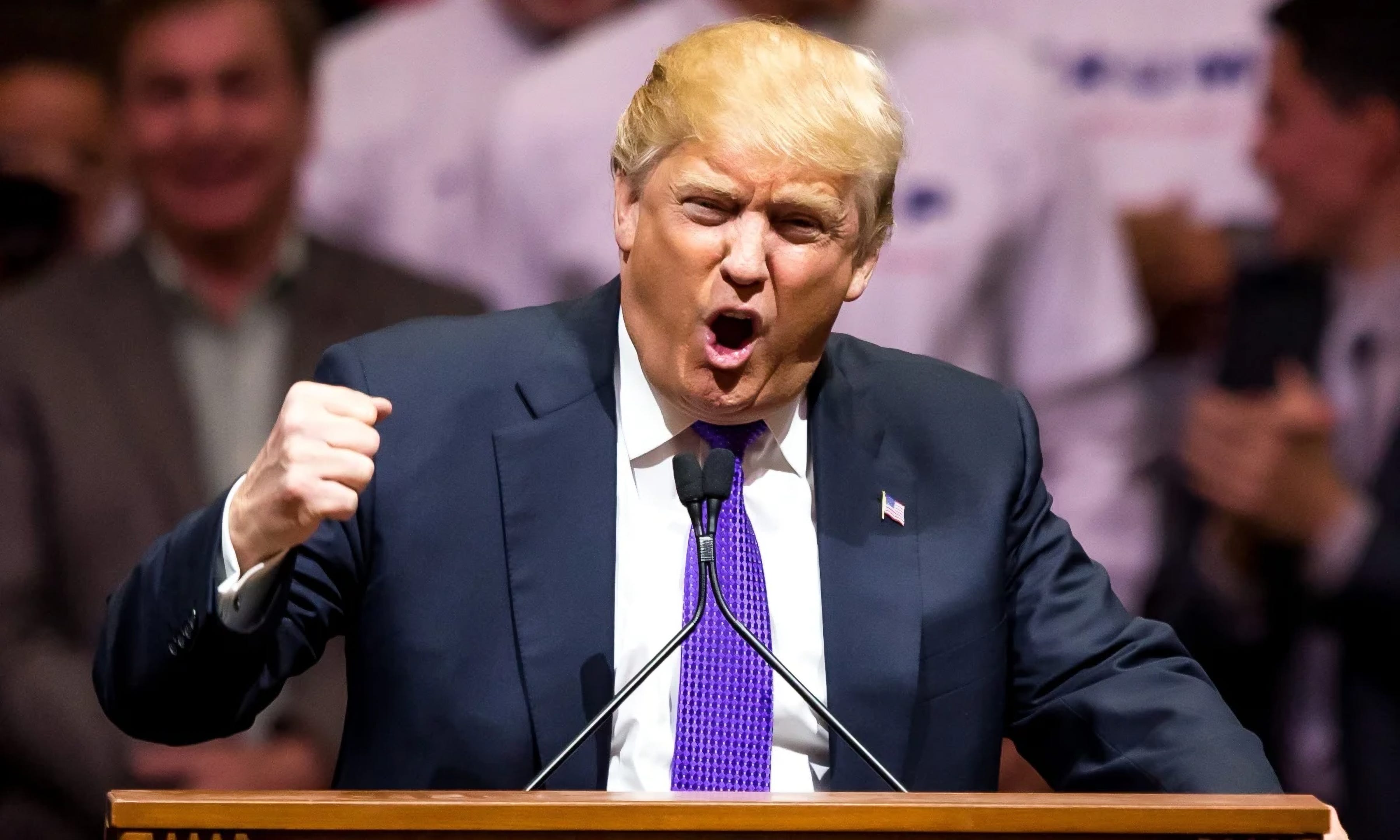
Kudos where he deserves it—Trump did free Ulbricht, and in his first week. The rest of the agenda has fared worse. The promises were few, popular, and measurable. So let’s measure.
Starting with prices. In August 2024, standing behind a table of groceries, Trump vowed that when he won, he would “immediately bring prices down, starting on day one.” That meant lowering the cost of oil, which trickles through the economy. So he promised to cut energy and electricity prices in half within 18 months at most. On the day he made that pledge, a gallon of regular gasoline cost Americans $3.44 on average. This week the national average stands at $4.33, nearly 90 cents and some 26 percent higher. Most of that increase is no doubt due to the war against Iran.
Which brings us to the second promise. On the night of his victory, Trump told supporters what he had been saying throughout the campaign: “I’m not going to start a war, I’m going to stop wars.” And then on January 3, American forces struck Caracas and seized Nicolás Maduro. On February 28, the United States launched strikes on Iran, sparking months of protracted conflict and escalating tensions. Iran answered by closing the Strait of Hormuz, the narrow channel through which roughly a fifth of the world’s oil and gas moves in peacetime. Some 100 ships once passed through each day; since March, traffic has averaged about seven.
How about tariffs, which were sold as a bill foreigners would pay? Turns out (shocker!) that more than 90 percent of tariff costs have been passed on to American consumers. In February, the Supreme Court ruled 6-3 that the emergency statute Trump invoked never authorized them. Within hours, the White House reimposed them under a different law, and when that authority lapsed in July, it replaced them again under yet another. It’s economic whack-a-mole. The average effective tariff rate, 2.3 percent when he took office, now stands at 7.1 percent. Despite the counterarguments, Trump has increased the cost of living by forcing domestic consumers to pay higher prices for foreign goods.
Then there’s DOGE. Here, I was hopeful we’d see some change, particularly because of Elon Musk’s involvement and that of private-sector engineers and entrepreneurs. There was some modest cost-cutting and ferreting out of fraud, to be sure—but federal outlays rose $386 billion in fiscal 2026, to $7.4 trillion. The deficit approached $2 trillion, the highest ever recorded outside a war or recession, and the gross national debt now exceeds $40.3 trillion. The government didn’t shrink its spending, but it definitely shrunk the value of the dollars in your bank account.
Finally, the Department of Education. In March 2025, Trump signed an order to “begin eliminating the federal Department of Education once and for all.” Nineteen months later, the department unsurprisingly endures. It has signed 14 interagency agreements shifting day-to-day management of nearly 150 programs to six other agencies, with most K-12 money now flowing through the Department of Labor. Congress, for its part, increased the department’s funding. The programs, the dollars, and the federal strings all remain intact; various other government agencies simply oversee them. We were promised abolition, and this is not it.
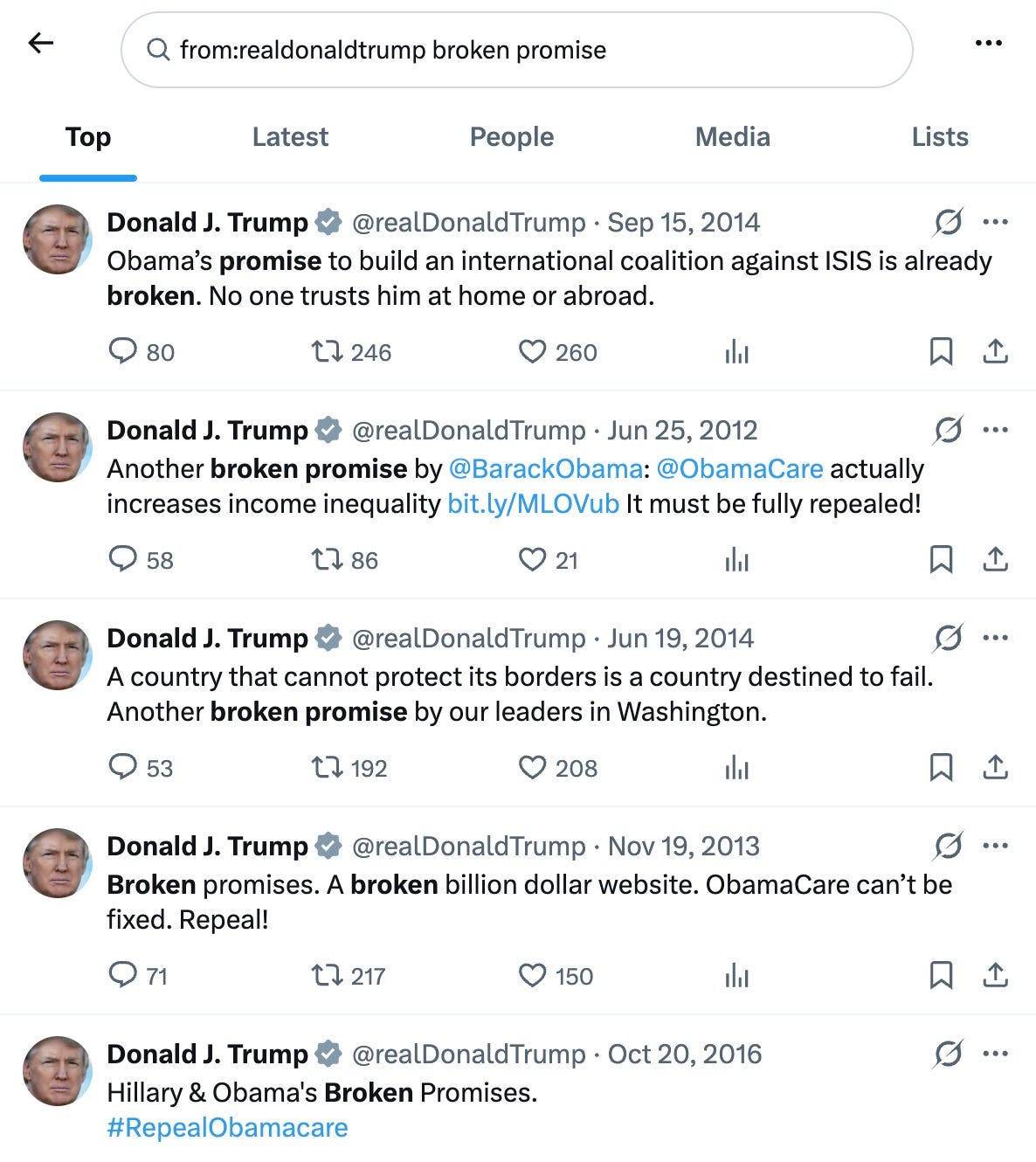
What makes this poor record so remarkable is the opportunity that accompanied it. Republicans have controlled the presidency and both chambers of Congress. The last time before Trump, in 2003, Republicans used their dominant influence to [:::checks notes:::] enact Medicare Part D, a vast new entitlement program. With Trump’s first trifecta in 2017, Republicans failed to repeal Obamacare after seven years of vowing to. Now comes the third squandered opportunity, with Republicans again proving how little they believe in the campaign promises they so generously offer.
Here the two-party system shows its least attractive feature. A disappointed independent has one practical way to register dissent: hand power to the other party, which promises more spending and harbors no special affection for liberty. Few of the voters delivering a blue wave will mistake Democrats for the remedy to Republican stupidity. They will simply be using the only lever the duopoly leaves within reach.
Still, there is something healthy in the exercise. Parties grow careless when they assume their voters have nowhere else to go. The voter who withholds support, who treats a ballot as a sort of contract and enforces its terms, supplies some semblance of the accountability that partisan loyalty never will. Of course, the libertarians and independents who lent Trump their votes in 2024 owe his party nothing in 2026. Their departure is the system working as it should, and the clearest message available to the next candidate who comes courting.
That candidate will come, as they always do, bearing promises. The lesson, I believe, is that promises function like a currency. They hold value only when the issuer honors them, and an issuer who prints them freely, without intending to redeem them, debases every one he has issued. On November 3, the voters who once accepted that currency will decide what it’s actually worth.
Is it realistic to think that any one man can completely overhaul the political rot of the past 65 years in a four year term, while simultaneously fending off domestic and foreign entities that seek to undo every reform before it even starts? This is happening on every front he’s faced. There are a lot of moving parts in the government, and contrary to what the media communists tell you, he’s doesn’t enjoy the sweeping power of a dictator or king. Who do you think can do better? Will you step up and run for office? I’ll take any successive approximations in the right direction. If the citizenry is dumb enough to walk back in the burning barn that is the Democrat/ communist party, and elect them, there won’t be a country that you’ll recognize in another 10 years. Look at the UK and France at this moment. That is our future too. This is no longer just political; it’s existential, good vs evil—- whether the general public realizes it or not.
How else would you have prevented Iran from sprinting to the final stage of gaining nuclear weapons? And if you didn't, once they acquired these weapons, what leverage would you have to prevent the predictable closure of the Hormuz Strait anyway, and the subsequent regional destabilization? A temporary 26% increase in the price of gasoline seems like a price we ought to accept as the cost of living in a dangerous world.