


On a Tuesday in May, Republican voters in Kentucky’s Fourth District retired the most stubborn man in Congress. Thomas Massie, an MIT-trained engineer and seven-term incumbent, lost his primary to Trump-endorsed Ed Gallrein in a race that drew more than $32 million in ad spending, the most expensive House primary in American history. All of this to decide who would occupy one seat out of 435.
So why that seat, and why so much?
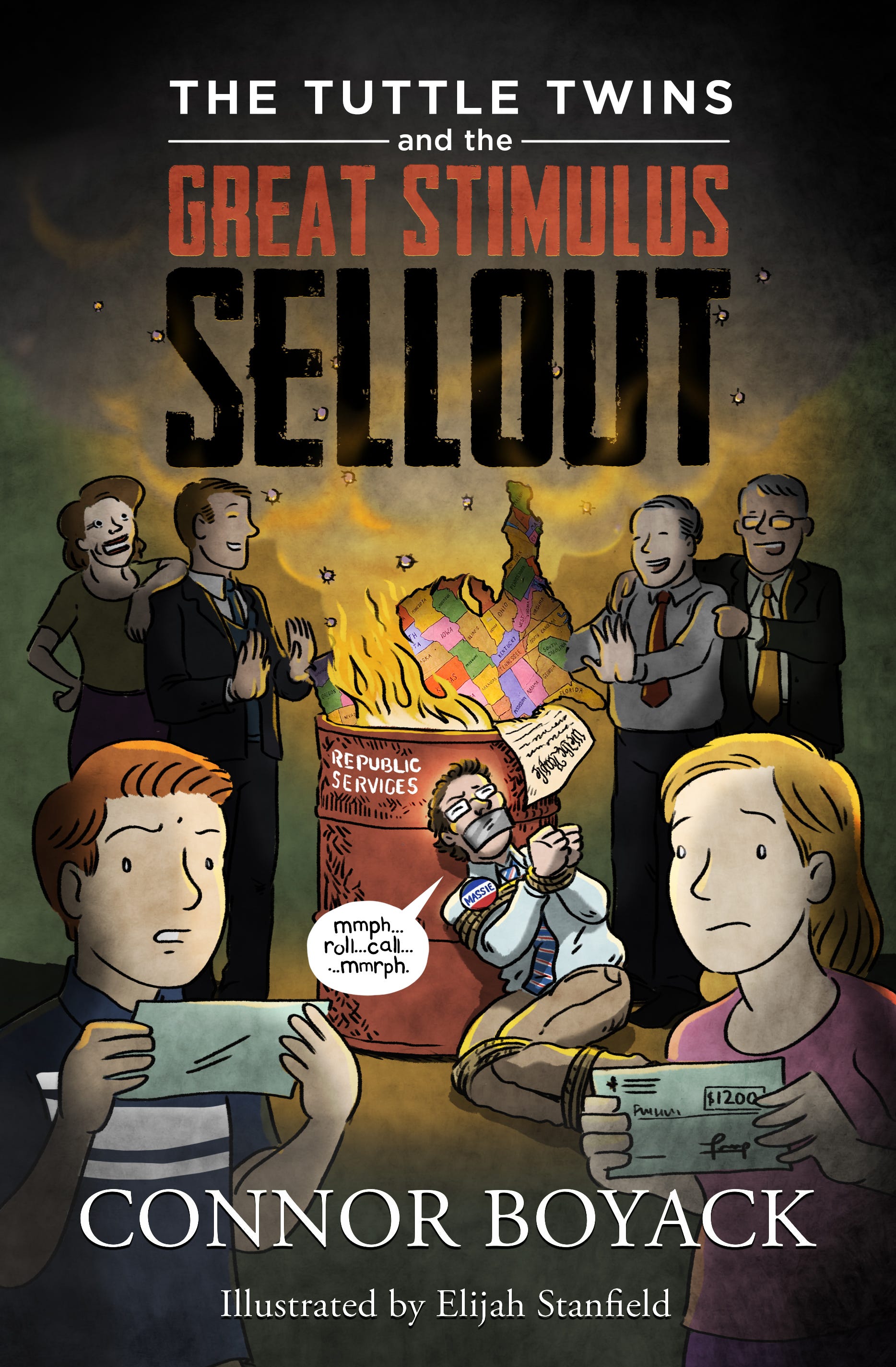
Massie was a particular kind of irritant. He arrived in Washington in 2012, the year Ron Paul departed (after an awesome mic drop), carrying Paul’s endorsement and much of his creed. He took up Paul’s old cause of auditing the Federal Reserve, reintroducing the bill Congress after Congress. He voted against deficits, no matter which party created them. In March 2020, as leaders of both parties prepared to pass a $2 trillion stimulus package by voice vote in a mostly empty chamber, Massie demanded a recorded vote, saying he refused to let the republic die “by unanimous consent and an empty chamber.” The president called him a “third-rate grandstander.” Massie’s great sin was wanting the public to know who voted for legislation so economically consequential.

Last year he did something rarer still. When House leadership refused to bring the Epstein Files Transparency Act to the floor, Massie gathered 218 signatures on a discharge petition and forced the vote over the objections of the Speaker and the White House. It passed 427 to 1. One member of Congress, armed with nothing but the rules, had compelled the government to open its files.
For this he was marked. The president recruited his challenger (a loyal NPC if ever there was one), rallied for him in the district, and dispatched his lieutenants. Secretary of War Pete Hegseth campaigned in Kentucky against a sitting congressman of his own party. Gallrein’s victory speech offered a fitting summary of his platform: his focus, he said, was advancing “the president’s and the party’s agenda.” Barring a surprise on November 3 (this district hasn’t sent a Democrat to Washington since 1967), the man whose chief credential is a presidential blessing will soon be a congressman, and the man who would not kiss the ring will be a private citizen.
It is tempting to read all this as a story about one rebel and one president. A more interesting question lingers beneath it: what makes a single House seat worth $32 million?
The answer is scarcity. If you concentrate power in a few hands, you raise the value of each hand. Raised value means raised stakes, leading every faction with money and a grievance to pay almost any price to win. The presidency is the extreme case, a quadrennial war over control of the executive branch, whose reach expands with every administration. But the same math now governs ordinary House seats. When one member can force the release of files a president wants buried, that member’s seat becomes a prize worth buying, or a threat worth removing.

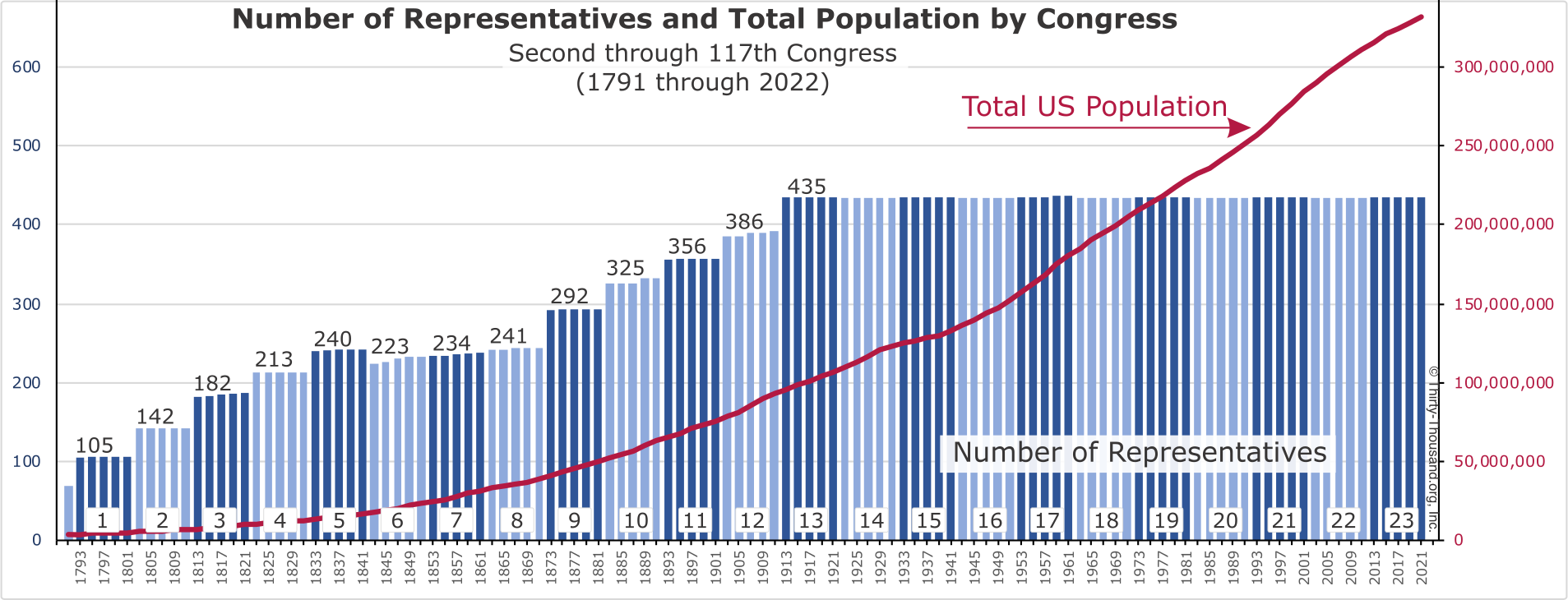
The founders saw this coming. The Constitution caps the House at one representative for every 30,000 people; it sets a ceiling and no floor. George Washington, who otherwise sat silent through the Convention’s debates, rose on its final day for his only substantive intervention: to shrink districts from 40,000 people to 30,000—bringing power even closer to the people. Madison later conceded he had “always thought this part of the constitution defective,” meaning it was a problem to specify the maximum size the House could grow into, without setting a minimum as well.
So the very first amendment Congress sent to the states in 1789, listed ahead of the guarantees of rights of speech and bearing arms, was meant to fix it. Article the first would have required the House to grow with the population, eventually guaranteeing at least one representative per 50,000 people. States ratified the proposal, and by the end of 1791, it stood one state short of adoption. Kentucky, newly admitted, ratified it in 1792, but its statehood had raised the overall threshold, and the amendment thus remained one state short. To date, it has never been ratified, and because Congress set no deadline, it technically remains pending.
What’s crazy is imagining the country it would have built. Applied to the 2020 census, the intended version would require a House of at least 6,623 members, and the Constitution would permit as many as 11,036. Instead, we have had 435 since 1911, while the population has more than tripled. The average district now holds roughly 761,000 people, more than the entire state of Wyoming. No human being can represent 761,000 people in any meaningful sense. He can poll them, mail them, and fundraise from the few who can afford access. He cannot know them, and they cannot know him. A growing population means that representation routinely dilutes, until what remains is a broadcast from a distant capital to an audience that long ago stopped expecting a reply.
Let’s return to Massie’s district in Kentucky. Its population would fill fifteen districts of 50,000. A challenger could win one by knocking on doors. No super PAC would spend $32 million on a seat worth one six-thousandth of a chamber. No president could recruit fifteen loyalists and fly the Secretary of War to every county fair. Members could be removed more easily, which means they would listen more closely. And a man like Massie would cease to be a lonely exception, because the conditions that produce independent voices would be everywhere.
Would such a body be unwieldy? The House already does nearly all its real work in committees, and it authorized remote committee work in 2020. Build a larger chamber, or let most members legislate from home, living among the people they serve rather than among the lobbyists who court them. And if a nation of 340 million truly cannot be governed by a legislature large enough to represent it, that too is information worth heeding. Perhaps the problem is the size of the union itself, and peaceful separation into smaller, more governable republics deserves serious thought. Free people have redrawn their political boundaries before, and the republic Americans inherited was itself born of exactly such a separation.
Whatever the mechanism, the principle holds. Concentrated power invites conquest; diffused power invites persuasion. Every office that grows too valuable becomes a battlefield, and factions stop trying to convince their neighbors and start trying to rule them. The remedy is to push power downward and outward, into more hands, closer to home, until no single seat is worth buying. That is the only durable path to freedom.
Massie leaves office in January (maybe he, too, will leave with a memorable mic drop). Gallrein’s backers spent a record sum to win one seat. The founders proposed the solution at the country’s inception (a proposal Kentucky voted for!). We should pass that amendment and radically reduce the concentration of power in Congress.
Were you aware of “Article the first”? Most people aren’t. The typical approach to teaching American history is ineffective and omits so many critical parts of our history that matter for freedom and are unflattering to the government. (Can you expect otherwise from government schools?) All the more reason to get America’s History from the Tuttle Twins for the little ones in your life.
💯 agree! 30k voters per district at most! …but what did you mean by a minimum?