

New data from our latest Overton Insights poll reveals that the GOP is in some hot water. We shared the data exclusively with the Wall Street Journal, whose editorial board wrote that Texans disapprove of his tariffs, 54% to 46%. Independents and others who skip the party primaries reject them 68 to 32. Hispanic Texans, 69 to 31.
That last number ought to rattle more than a few consultants. Trump won 55 percent of the state’s Hispanic vote in 2024, a Republican high-water mark built in no small part on anger at inflation. Two years later, the same voters are looking at the border taxes aimed at Mexico and Canada and concluding, reasonably, that they are the ones paying.
The independent split in this data will matter in November. Midterms are influenced by the lightly attached voters: the people who did not vote in a primary, who split tickets, and who bear no strong allegiance to a particular party. A 36-point gap among those voters is a red flag for Republicans.
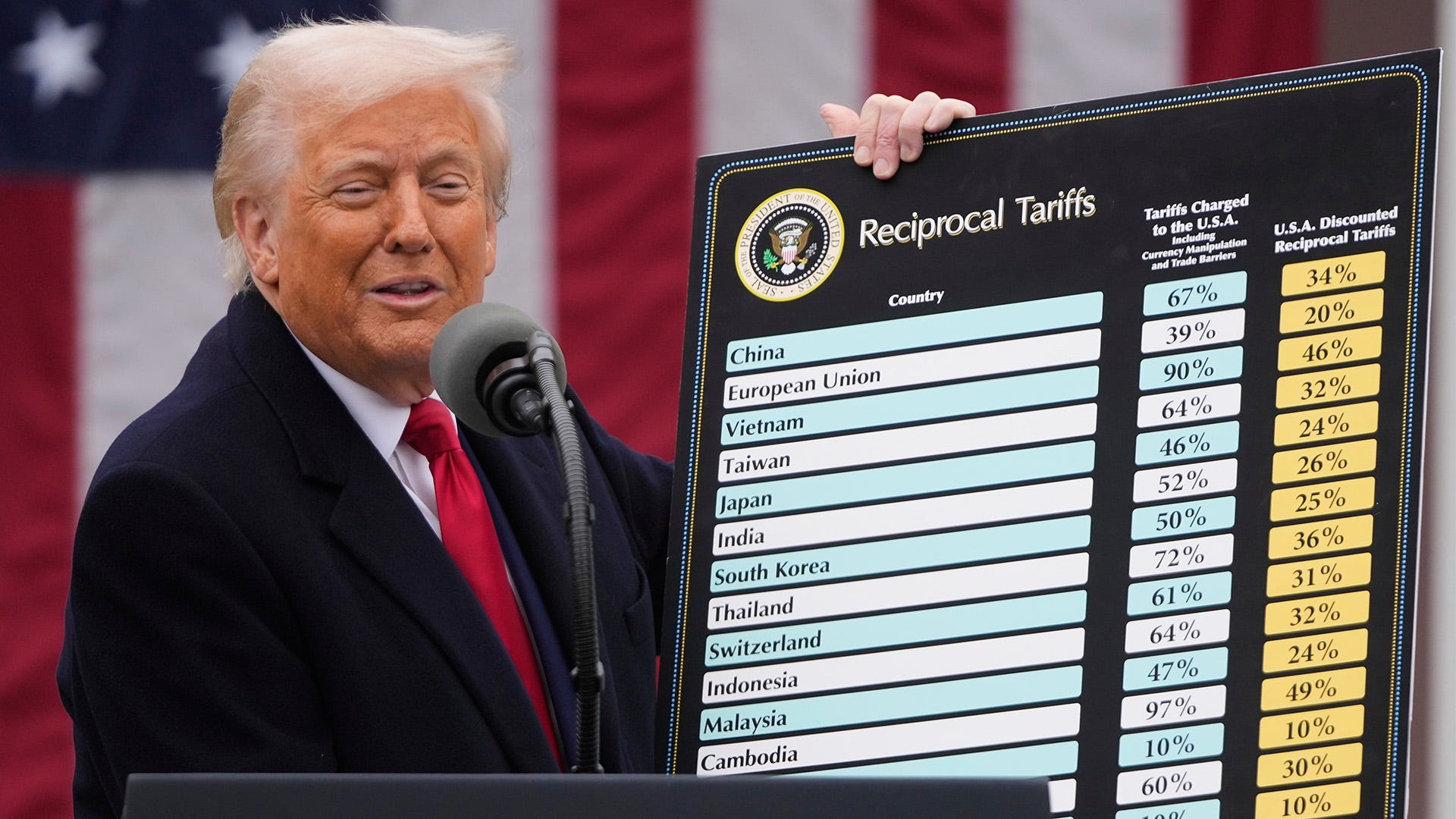
A tariff is a tax. It is collected at the port, folded into the invoice, and passed on to customers at the point of purchase. The president prefers to describe it as a levy on foreigners. Researchers at the Federal Reserve Bank of New York (and yes, I feel dirty quoting them…) found that nearly 90 percent of the 2025 tariffs’ economic burden fell on American consumers, shocking no one who understands basic economics. The Congressional Budget Office reached the same conclusion: tariffs raise prices and reduce consumers' purchasing power. Foreign exporters do not write the check at the grocery store. We do.
A simple example will help illustrate. Carlos from Mexico sells a bag of tamales to Tom in Texas, for $10. The government imposes a 20% tariff on goods in Mexico, perhaps to “make Mexico pay for the border wall.” Now Carlos sells his bag of tamales for $10 + 20% = $12. The US collects its $2 from Carlos after the sale, who retains his $10. Thus, Tom paid the tariff. The burden rests upon (and the tariff financially punishes) the consumer.
Defenders answer that other countries tariff us first, so a round of tit-for-tat is only fair. British economist Joan Robinson pointed out in 1937 that for a free-trader to argue for this position is as sensible as “drop[ping] rocks into our harbours because other nations have rocky coasts.” A rocky coast is a misfortune. Rocks in your own harbor are a decision.
Texas is the worst possible place to argue otherwise. The state was the country’s largest exporter of goods in 2025, shipping $450 billion abroad, including $299 billion in manufactured products: computers and electronics, chemicals, transportation equipment. Mexico remains the largest customer at $125 billion. The Journal notes the integrated supply chains that run both directions across the river, and the retaliatory duties that follow when Washington starts a fight. Texas does not merely consume imports. It is a trading state. A border tax is a tax on Texas.
Seeing this polling data, I’m reminded of James Carville, who told staff during the 1992 Clinton campaign that, “It’s the economy, stupid.” He was describing how voters actually decide. They feel prices and wages. They notice whether next month looks harder than last month. They do not feel a press conference about reciprocity. They feel the drain on their bank account.

The November midterms will be, in part, a referendum on these tariffs, as the Journal argues, and most public polling already shows Republicans underwater. The Texas Senate race between Republican Ken Paxton and Democrat James Talarico has been a coin flip all summer in a state Trump carried by fourteen points, with voters naming affordability as their first concern by a wide margin. South Texas House seats Republicans expected to harvest after a favorable map redraw are drifting the other way. The voting coalition assembled in 2024 included a great many people who wanted cheaper groceries and a government that would stop making ordinary life more expensive. Taxing the goods they buy is a peculiar way to cultivate their continued political support.
And while most political strategists focus on the next election, the consequences of this economic intervention won’t be limited to November. A second-term president writes the first chapter of the next nominating contest whether he means to or not. If the signature economic policy of these years is a tax that independents and Hispanic voters reject two to one, the next Republican nominee inherits a sour memory and a smaller inheritance.
There is a better policy, of course. Stop using the tax code as a weapon against consumers. Stop pretending that a managed economy somehow turns “conservative” (whatever that word means…) the moment a Republican is doing the managing. Spend less. Tax broadly, lightly, and visibly. Let people buy what they value from whoever will sell it. If another country insists on impoverishing its own citizens, that is an occasion for pity rather than imitation.
The Overton Insights numbers reveal voters’ opinions on the actual impact of these policies, no matter what talking points were used to justify their enactment. Between now and election day, cash registers and bank accounts will both keep telling Texans what these policies actually cost. Carville had it right, whatever his own party has since forgotten. People vote based on how these policies, and taxes, impact their lives. If the pitch was that someone else would pay, a majority of Texans are rightly rejected it.
Overton Insights is an initiative of Libertas Network—a new public opinion polling firm designed to assess where voters stand on key issues. We launched it last year and, after running several national polls that brought in tens of millions of dollars in earned media, we are now growing it by taking on clients. If you know of an interested organization, drop us a line.
I think one of the reasons tariffs are put into place is to bring production back to the United States. We need to stop importing things we can produce here. That’s what people aren’t seeing.
For decades we have outsourced our industries and jobs, even for sensitive things like steel and technology that can negatively affect national security, to our "enemies." Trump's tariffs are turning this national mistake around, bringing back manufacturing, industries and jobs to America assuring prosperity for the future, providing for our national security, and facillitating more favorable trade negotiations with other nations. It is given that Americans will pay more when buying cheap goods from China but that will discourage the current mass consumption of Chinese subsidized products and stop strengthening the economic power of China. The major cause of high prices for groceries and other consumer goods that the public notices is not the tariffs, but the runaway inflation rate given us by the Biden administration, largely driven by restrictions on fossil fuels. Trump's drive to facillitate fossil fuel exploration and production is reversing much of the inflation Biden gave us. The current efforts to free up middle east oil distribution should also contribute greatly to the reduction of inflation which can be easily seen by the public at the gas pump and in the grocery store. Voters need to understand these things, and hopefully inflation and prices will fall enough by the midterms for the average person to see the value of good economic policies and stick with the "America First" Trump agenda.