

The average American worker with family coverage now pays $7,471 a year toward his health insurance premium, according to KFF’s 2026 Employer Health Benefits Survey, released last week. That is nine percent more than a year ago. It is also the small part of the bill. The full family premium, most of it paid by employers, now averages $28,303.
Frédéric Bastiat held that the bad economist sees only what is seen, while the good one accounts for what is unseen. American health care may be his best illustration. The worker sees $7,471. He does not see the roughly $20,800 his employer pays on his behalf, money that would otherwise have reached his paycheck. KFF has estimated that the full cost of a family premium now exceeds 40 percent of a typical salary. No family would shop for groceries by handing over a card and never glancing at the receipt. For medicine, nearly every family does. Then we wonder why the total keeps rising.
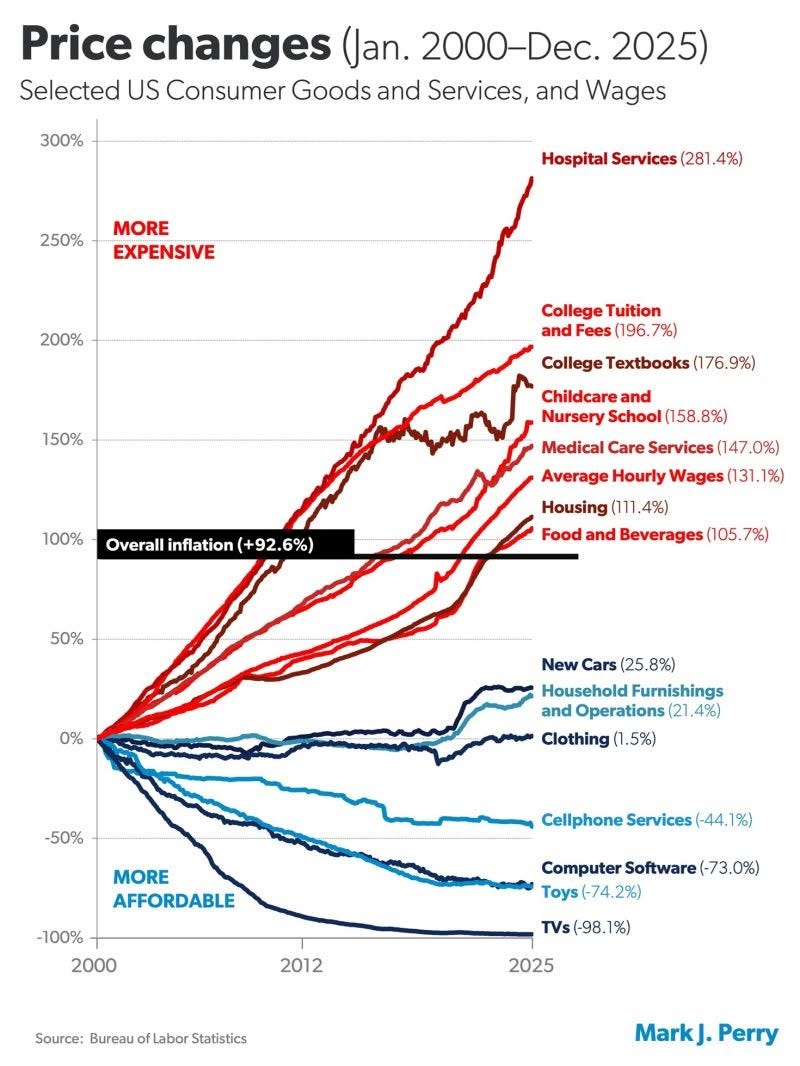
When President Obama signed the Affordable Care Act (ACA) in 2010, the average family premium was $13,770, with workers paying just under $4,000 of it. Both figures have since roughly doubled. Reaching back to 1999, when the family premium stood at $5,791, the increase approaches fivefold. From 1999 to today, consumer prices rose about 93 percent (mostly due to monetary inflation). Hospital services rose 281 percent.
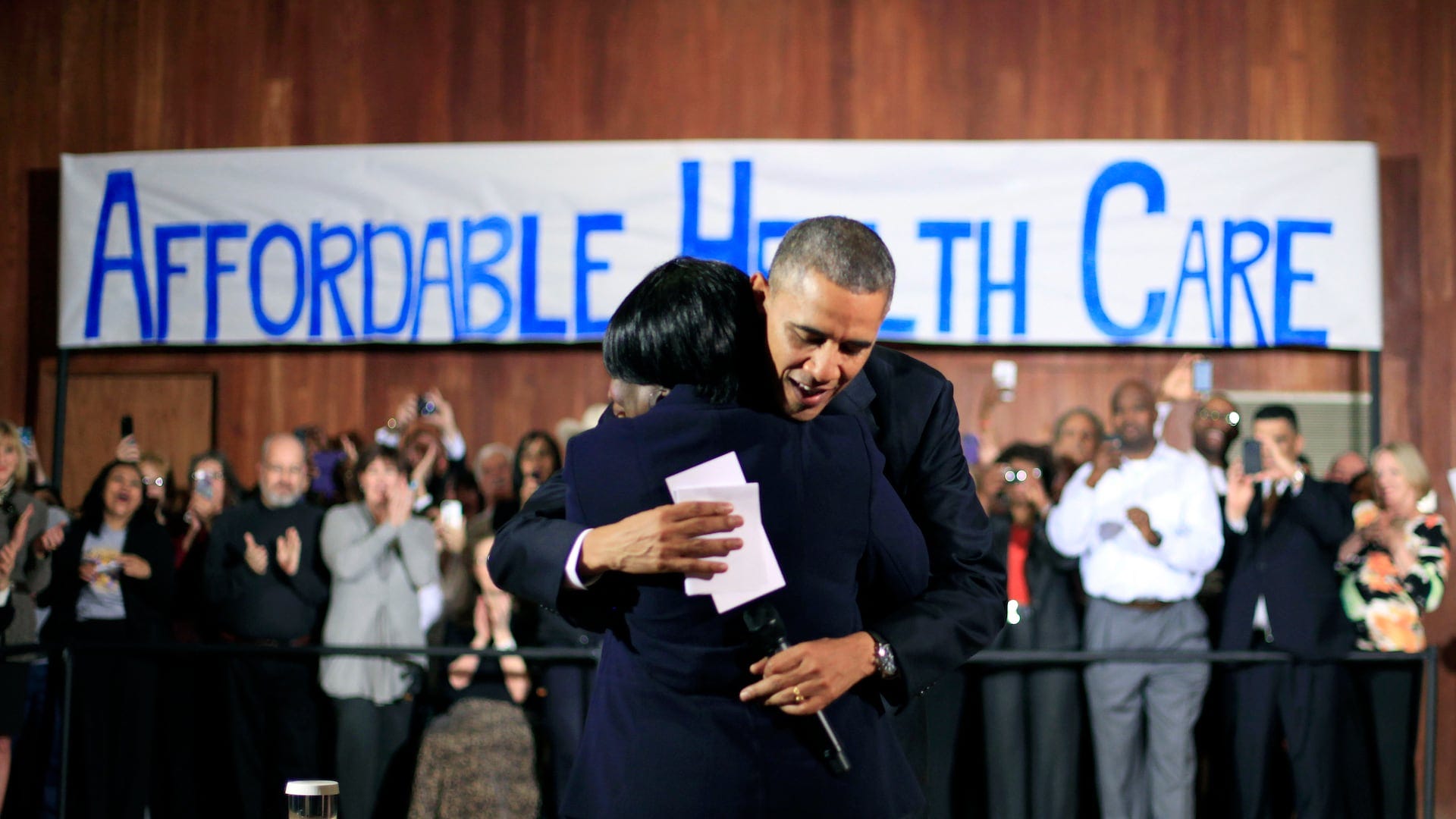
The law’s central promise was cheaper premiums. Obama made it again and again:
“We’ll lower premiums by up to $2,500.” (June 5, 2008)
“Now is the time to finally keep the promise of affordable, accessible health care for every single American. If you have health care, my plan will lower your premiums.” (August 28, 2008)
“If you like your health care system and your doctor, the only thing reform will mean to you is your health care will cost less. If anyone says otherwise, they are either trying to mislead you or don’t have their facts straight.” (June 15, 2009)
“Our cost-cutting measures would reduce most people’s premiums.” (March 15, 2010)
“A lot of Americans will pay significantly less for their insurance than they do now.” (September 26, 2013)
The third one is my favorite. Anyone who objected to Obama’s claims (present company included) was either trying to mislead you or [doesn’t] have their facts straight. Of course, as is so often the case, this turned out to be precisely backward.
So who has gained from all this? Cui bono? The largest insurers collected more than $371 billion in profits in the years following Obamacare’s passage. UnitedHealth Group, the nation’s largest, closed recently near $396 a share; in late 2010 it traded around $28 on a dividend-adjusted basis. Regulatory capture pays well.
While the ACA failed to lower premiums, this wasn’t its true goal. It was just the publicly stated claim, the political promise. Think of the history: by the early 2000s, the number of insured Americans had begun to decline. The genius of the ACA, for insurers, was that the law ordered individuals to obtain coverage, while forcibly expanding the coverage such individuals would receive. Few industries receive a government-guaranteed customer base. Fewer still get one obliged to keep paying as the price climbs. Judged by its promises, Obamacare failed. Judged by its beneficiaries, it worked as designed.

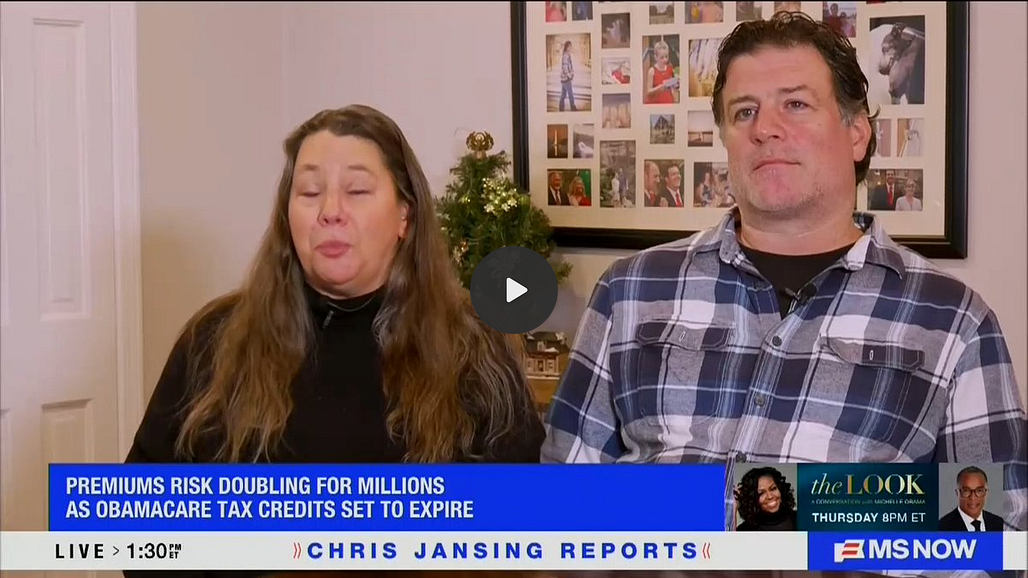
Many Americans are in the same situation as Amber Kostka, who runs a restaurant in Hampton Roads, Virginia. Amber told Time that her premiums have roughly tripled since 2018, and only about a third of her eligible employees now take the plan. Instead, they choose to pay for life necessities like groceries. Other families are quietly building alternatives, paying cash at surgery centers that post their prices, or joining direct primary care practices for a flat monthly fee. They are rediscovering, by necessity, what an actual market looks like.
The Mises Institute has traced how health care’s arrangement took shape over a century. Licensing and accreditation choked the supply of doctors. A mid-century tax preference tied insurance to employers. Medicare and Medicaid poured federal money into a market that could not expand to meet it. Each round of rising prices became the justification for the next round of subsidy, which raised prices yet again. As Milton Friedman observed, nobody spends other people’s money on other people as carefully as he spends his own. We have built a medical economy almost entirely on the least careful kind of spending.

The repair begins with better supply. Repeal the certificate-of-need laws that make a clinic seek government permission, often over competitors’ objections, before it can open or expand. Let a nurse licensed in Ohio practice in Indiana. Stop paying hospital-owned facilities more than independent clinics for the same service. Then return the money to the patient. End the tax preference that chains insurance to employment, and let families own portable policies and health savings accounts. Let them insure against catastrophe and pay for routine care directly, from a posted price or a monthly subscription. And let insurers sell plans with the deductibles, networks, and benefits people actually choose.
The chart below makes the pattern hard to miss: the goods and services government touches least have grown cheaper, and those it touches most have become far more costly, especially health care.
The interests that prospered under the current design will resist every one of these reforms, and they are formidable. But they have one weakness: their system depends on keeping the bill out of sight, and the bill is becoming impossible to hide. This year, 18 percent of employers, including two-thirds of the largest, shifted more of the premium onto workers, and deductibles keep climbing. Each shift moves more of the unseen cost onto the pay stub, where it can finally be seen. Families paying a higher price begin to ask what they’re buying, and whether it’s worth it.
Millions of families are already asking that question, some by dropping coverage they can no longer afford, others by seeking out doctors who will quote a reasonable price before providing their services. What remains to be seen is whether the rest of us will join them in demanding a market where the price is visible, the choice is ours, and the money spent on our care is finally our own.