

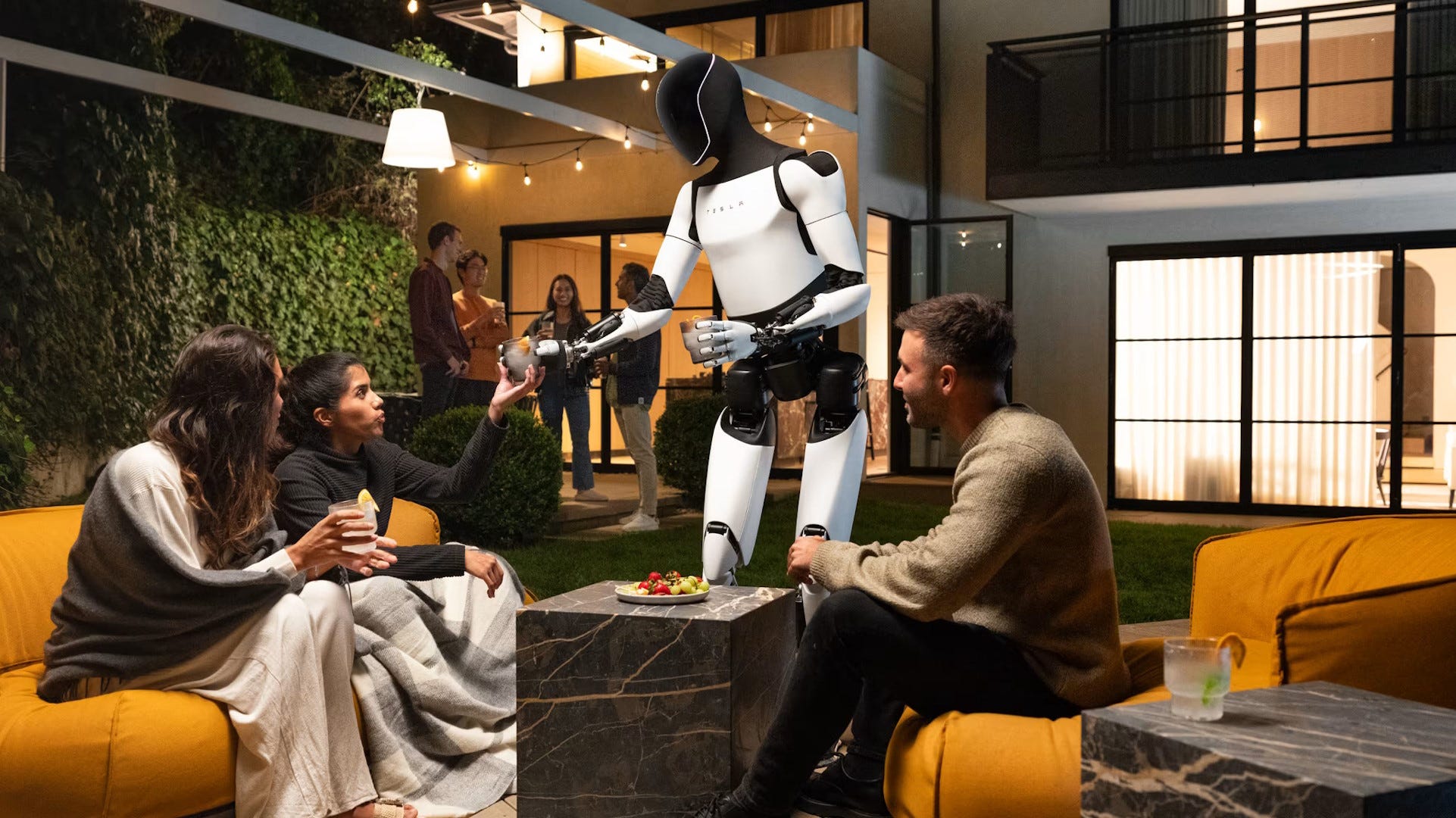
The richest man in the world has a prediction, and he repeats it often enough that it has begun to sound like a promise. Within twenty years, Elon Musk says, artificial intelligence and robotics will make work optional. Machines will produce whatever we need, a “universal high income” will replace the paycheck, and labor will become something like a hobby. “In a benign scenario, probably none of us will have a job,” he said last year. He offered this, I presume, as the good news.
Perhaps it is. After all, poverty has been the default condition of nearly every human who ever lived. Yet the future forecast skips a critical question: What becomes of a person who is never needed?
For most of history, nobody had to ask. Until a couple of centuries ago, nearly everyone farmed. A farmer did not lie in bed deliberating over the purpose of his day or the meaning of his life. Necessity set his agenda, and meaning arrived as a byproduct of getting the work done. Children grew up useful because the household could not survive otherwise. There were no fat farmers, and few aimless ones. The work that strengthened the body also shaped the character.
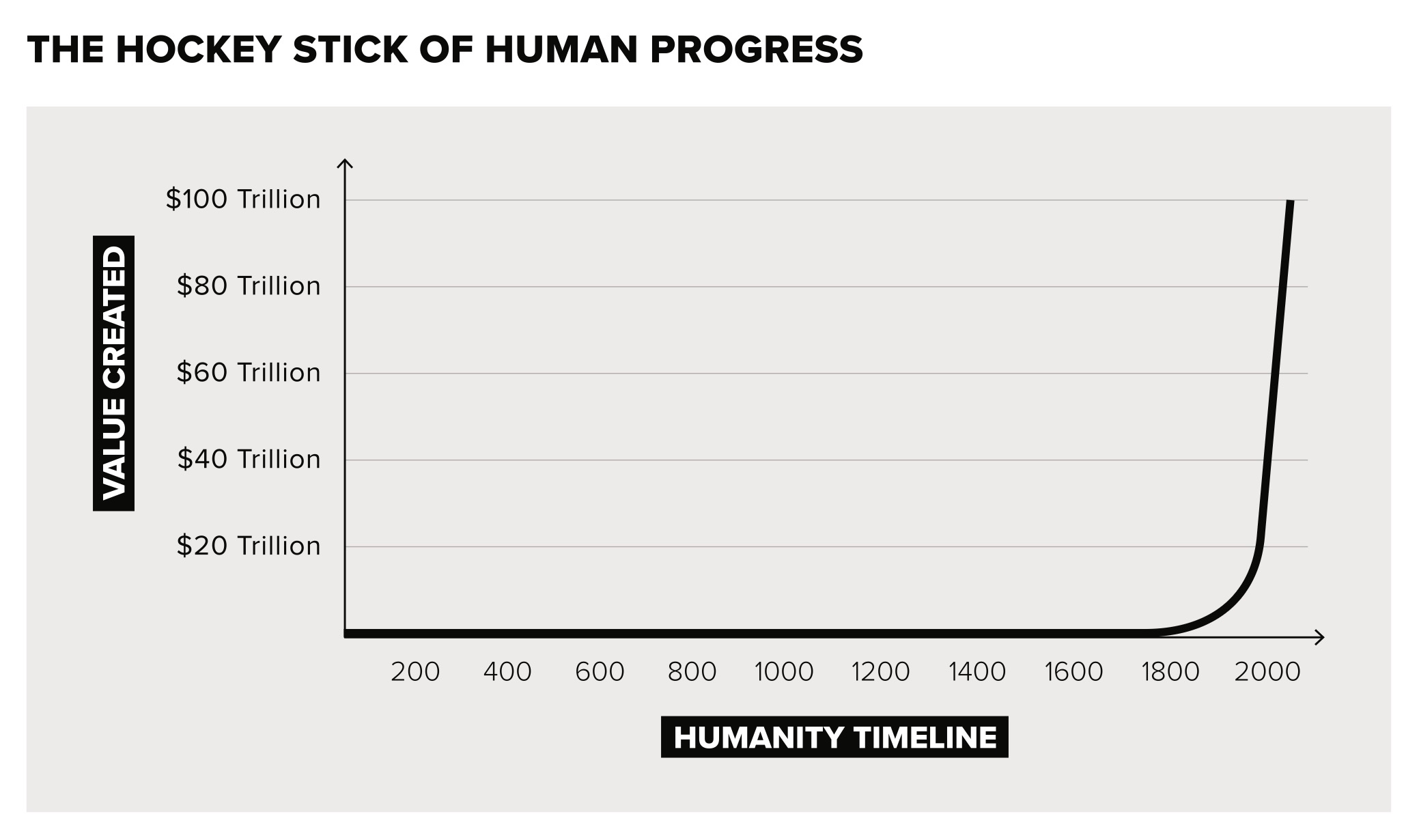
Then came the great escape. Since the Industrial Revolution, material abundance has climbed along the steep curve economists call the hockey stick, and with each step up, a little more necessity fell away. We now live largely sedentary lives, having lost the physical demands of the farm. We’ve also lost an environment that helped us find meaning.
For generations, this was a rich man’s problem, discussed by estate attorneys and family office advisors. It no longer is. The comforts that once belonged to the ultra-affluent now arrive at the median household by same-day shipping; even the poorest among us enjoy comforts that kings of old could not have bought at any price.
That wealth has brought blessings but also caused many problems. Harvard’s Global Flourishing Study observed an inverse correlation between financial prosperity and human well-being. The researchers noted, in a New York Times op-ed last year, that “We need to figure out how to foster economic development without compromising meaning, purpose, and relationships.” Put simply, humans struggle when struggle is removed from their lives.
This challenge is well known within wealthy circles, sometimes called entitlement, drift, or “trust fund kid syndrome.” Few affluent families have solutions to address it (more on that in a moment), but at least they’re aware of how hard it is to raise successful humans when life’s necessities have been dissolved. Broader society, however, is unprepared for the challenge. And if Elon and his like-minded forecasters of the future are correct, then we’re in for dark times—a society full of drifting trust fund kids.

Speaking of dark times, let’s talk about Yuval Noah Harari, the Israeli intellectual who’s a fixture at the World Economic Forum. He has spent years describing what he calls the “useless class”: people rendered economically irrelevant by machines that outperform them. In one widely circulated talk, he named the great problem of the coming decades: “what to do with all these useless people.” He shared:
The problem is more boredom, and what to do with them, and how will they find some sense of meaning in life when they are basically meaningless, worthless. My best guess at present is a combination of drugs and computer games.
Note the grammar. In Harari’s telling, the “useless” are the object of every sentence. Things are done to them and for them; they are managed, provisioned, occupied.
Readers should recognize the dystopian future Harari forecasts because it’s not new. Juvenal mocked a Roman populace that had traded its civic birthright for bread and circuses. Huxley imagined a world pacified by soma and the feelies. A population that produces nothing depends on whoever distributes the provisions, and dependence is the one condition under which a free people cannot stay free. Harari himself concedes as much, warning that those who lose their economic power lose their political power along with it. He simply seems more at ease than the rest of us with where that leaves them.
The proper reply to “what do we do with useless people” is to reject the premise. No child is born useless. Every child is born capable of becoming useful, and whether that capacity develops depends heavily on how deliberately the adults around them cultivate it.
When we lost the physical exertion of the farm, we built a trillion-dollar fitness industry to replace it and offset the sedentary nature of our lives. That’s intentionality. We recognize our poor health and act accordingly.
Society has created almost nothing comparable for character development. A neglected body announces itself quickly, in clothes that no longer fit. By contrast, neglected purpose compounds quietly for years and surfaces only as crisis.
In Atomic Habits, James Clear observed that however high our goals, we fall to the level of our systems. Every parent hopes to raise an industrious, purposeful adult. Affluent families desire to avoid the stereotypical trust-fund-kid problems with their own children. But far too few have built the system that makes success likely. And that’s precisely what is needed: a family operating system to help children joyfully struggle for things that have meaning and create value for others—the true measure of a wealthy life.
I describe this system in my new book, The Wealth Trap: The Blueprint to Raise Builders, Not Beneficiaries, which will be published tomorrow. The premise of the book is simple: in a materially abundant world where comfort and ease replace necessity, parents have to be extremely intentional about creating an environment in which their children see financial resources as fuel for building, not permission to coast.
Elon may be right about the machines. But every market rewards the scarce thing, and in a world of machine-made plenty, the scarce thing will be a person who wants to build. Parents who raise that kind of child will have given them the one asset no robot can mass-produce. Parents who don’t may discover that Harari’s best guess was right after all.
Alongside the publication of The Wealth Trap, we are launching NextGen Builders, an educational platform and coaching program that helps ultra-high-net-worth families, who feel these pressures first and most acutely, put the book’s ideas to work with their own children.
Harari’s quote demonstrates spectacular hubris. Perhaps it’s a blessing to be relieved of boring, repetitive, stressful, transactional jobs, so that we can spend more time on the things we enjoy and that bring satisfaction and meaning to our lives. I am surrounded by retirees who have no problem finding meaning outside of Harari’s ‘best guess’ of drugs and computer games. Challenges not withstanding, dystopian speculation regarding the ‘irrelevant masses’ seems unnecessary.
At some point, a line must be drawn. If Harari, Elon and friends succeed in creating the dystopia they seem to desire, then even if we're able to teach our children to seek and find meaning, they will be a small minority in a democracy ruled by amoral plutocrats and populated mostly by aimless, depressed, totally dependent, nihilistic do-nothings. What kind of world will that be, and how can we avoid it?